Description
Stickman Hook turns a single press into a surprisingly expressive movement system. Swinging, releasing, and bouncing through compact stages feels excellent when momentum clicks, although advertising and repeated obstacle patterns can weaken longer sessions.
Stickman Hook Review
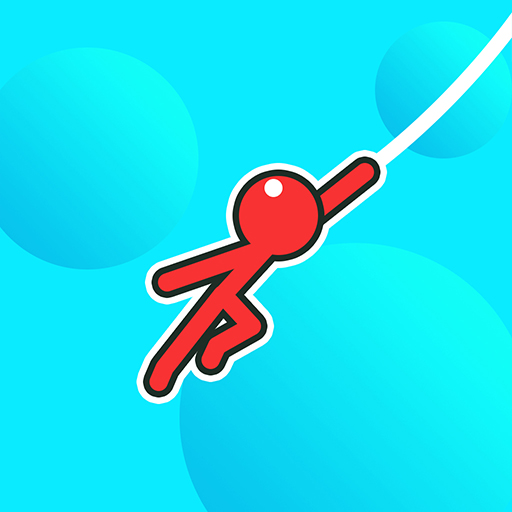
Stickman Hook is built around one clear idea: attach to a nearby anchor, swing under it, and release at the right moment to carry momentum toward the finish. The character automatically becomes a ball when not attached, allowing floors and pads to convert falls into useful bounces. That combination gives a one-touch game more freedom than its simple appearance suggests.
Good levels reward looking ahead. The nearest anchor is not always the best one, and holding too long can drain speed or send the character backward. A clean run often alternates short corrective swings with one large release that skips part of the course.
Restarts are fast, which makes experimenting with a risky route enjoyable. Difficulty grows through tighter spacing, moving parts, and layouts that punish poor release angles rather than through new controls. The visual style stays readable, and unlockable skins add light progression.
Reused structures eventually become noticeable, and frequent ads can disrupt the rhythm of retrying levels. Even so, the physics are consistent enough that success feels earned. Stickman Hook is strongest as a short arcade challenge for players who enjoy improving a route rather than collecting complicated upgrades.
Base Info
Official Sources
LumenPlays points players to official store and publisher pages where available. Use these links to review current pricing, availability, privacy details, and device requirements.
Screenshots
How to Play Stickman Hook
Press and hold when the character is within range of an anchor point. The rope attaches automatically, and the character swings around that point. Release the screen to let go and travel in the current direction.
While detached, the character rolls or falls as a ball and can bounce from platforms and pads. Use the lower half of a swing to build speed, then release while moving upward and forward. Attaching too early can pull the character away from the goal, while holding through a full circle often wastes momentum.
Watch for the next two anchors before committing to the current one. Not every peg must be used. If a strong release can reach a later anchor or the finish platform, skipping an intermediate point is often faster and safer.
Small taps can correct height, but repeated desperate attachments usually produce an awkward angle. On difficult stages, first complete the course slowly to learn the layout, then replay it to find a smoother line. Landing beyond the finish marker completes the level even if the route was unconventional.
Pros
- Responsive one-touch movement
- Momentum allows creative routes
- Fast restarts encourage experimentation
- Clean and readable presentation
Cons
- Ads can break the retry rhythm
- Obstacle ideas repeat over time
- Cosmetic rewards add little depth
Beginner Tips
- Release while the swing is carrying you upward and toward the next safe point.
- Look beyond the nearest anchor because skipping a peg may preserve more momentum.
- Let bounce pads do their work before attaching again too quickly.
- Use short swings for corrections and longer arcs when you need distance.
- Learn a difficult layout at low speed before attempting an optimized route.
FAQ
How do you gain speed in Stickman Hook?
Attach before the bottom of an arc, let gravity accelerate the swing, and release while moving forward and upward.
Do you need to use every hook?
No. Strong momentum can carry the character past several anchors, and many stages allow alternate routes.
Why does the character turn into a ball?
The ball state allows the character to roll and bounce whenever it is not attached to a hook.
Are skins stronger than the default character?
Skins are mainly cosmetic and do not replace learning release timing and momentum.
Similar Games