Description
Solar Smash is a spectacle-driven sandbox for destroying planets with lasers, missiles, monsters, black holes, and orbital weapons. Experimentation and hidden interactions are entertaining, but the physics are stylized and structured objectives remain limited.
Solar Smash Review
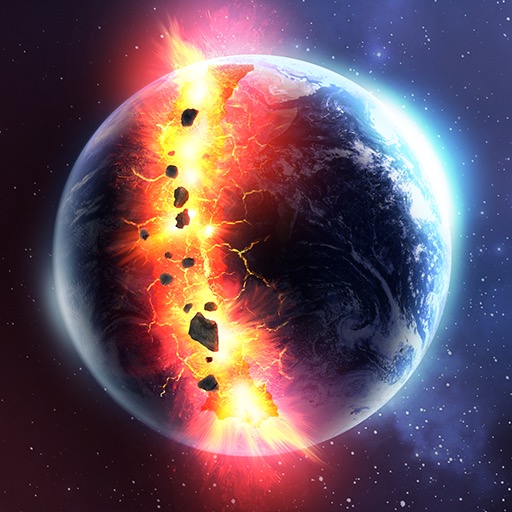
Solar Smash presents planets and star systems as interactive targets. Players select a weapon, aim at the surface or orbit, and watch cities, terrain, atmosphere, and planetary structure react through dramatic visual effects. Planet Smash is the most immediate mode.
Missiles leave craters, lasers cut through the globe, black holes remove enormous sections, and fictional creatures or spacecraft create large-scale destruction. Controls allow rotation, zoom, targeting, and adjustment of selected weapon parameters. System-oriented modes expand the scale by allowing celestial bodies to be placed or modified and then observing collisions or orbital interactions.
These tools encourage experimentation but do not reproduce professional astronomy or accurate planetary physics. The main appeal is curiosity. Players can test how many attacks a world survives, uncover secret planets or weapons, and create visually unusual damage patterns.
There is little economy, narrative, or campaign structure to organize that experimentation. Solar Smash works as a digital destruction toy rather than a strategy game. Repetition appears once every weapon has been sampled, and advertising or unlock conditions can interrupt discovery.
Its cosmic imagery can prompt interest in space, but no result should be treated as a scientific simulation.
Base Info
Official Sources
LumenPlays points players to official store and publisher pages where available. Use these links to review current pricing, availability, privacy details, and device requirements.
Screenshots
How to Play Solar Smash
Rotate and zoom around the target before firing. Select a weapon and tap or drag according to its control style, then wait for the full effect before stacking several attacks. Use small weapons first to understand crater size, penetration, and surface response.
Large lasers, black holes, and celestial impacts can remove the target so quickly that smaller interactions become impossible to observe. Experiment with angle and location. Attacking the atmosphere, poles, populated surface, core, or nearby orbit can produce different visual results even when the weapon is unchanged.
In system modes, add bodies gradually and observe their paths before creating a crowded setup. Treat orbital behavior as entertainment rather than an accurate model. Search for secrets through deliberate combinations instead of random tapping, but verify current-version requirements because unlock methods change.
Use reset to begin a clean experiment and skip reward ads that do not add a genuinely new tool.
Pros
- Weapons produce dramatic and readable effects.
- The sandbox encourages immediate experimentation.
- Planet and system scales offer different play.
- Secrets reward curiosity.
Cons
- There is little structured progression.
- Novelty declines after weapons are familiar.
- The simulation is not scientifically accurate.
Beginner Tips
- Observe one weapon effect at a time.
- Start small before using planet-ending attacks.
- Try different impact angles and locations.
- Build system experiments gradually.
- Treat every physics result as stylized fiction.
FAQ
Is Solar Smash an astronomy simulator?
No. It uses stylized fictional physics for spectacle and experimentation.
What is Planet Smash mode?
It lets players target a planet directly with a selection of destructive weapons.
Does the game have a story campaign?
The core experience is sandbox experimentation rather than a narrative campaign.
Why use reset frequently?
A clean target makes it easier to understand one weapon or combination without earlier damage affecting the result.
Similar Games