Description
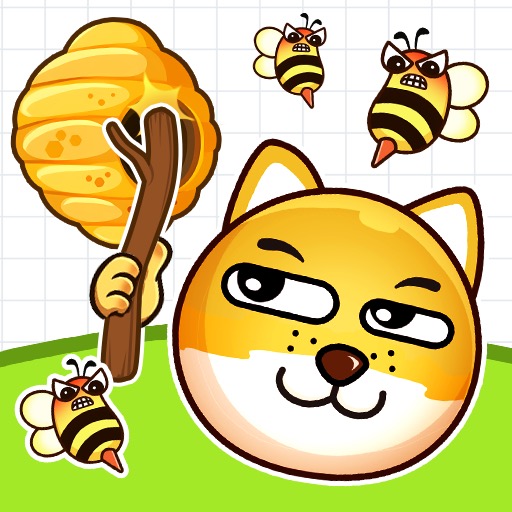
Save The Pets is a draw-a-barrier puzzle where one continuous line protects animals from bees and environmental hazards. The idea is immediately accessible, but physics inconsistency, repeated setups, advertising, and copied puzzle patterns reduce its lasting appeal.
Save The Pets Review
Save The Pets presents a small animal near a hive, lava, water, spikes, bombs, or other hazards. The player draws a line, releases the scene, and watches whether the resulting shape protects the animal for the required time. The useful puzzle is not simply drawing a roof.
The line has weight and collision, so it may fall, rotate, or push the animal into another danger. Good solutions anchor against walls, form stable bases, and use the environment instead of relying on a long unsupported curve. The control is easy to understand and encourages experimentation.
A failed drawing reveals whether bees entered through a gap, the structure collapsed, or another hazard was overlooked. Short levels make retries painless. Quality varies because the physics are simplified and not always predictable.
Similar bee-and-dog scenarios appear across many mobile titles, and later levels often remix familiar barriers rather than introduce new reasoning. Some stages reward drawing a bulky enclosure more than finding an elegant solution. Advertisements and hints are closely tied to retries and progression.
Save The Pets is best treated as a casual physics doodle, not evidence of improved intelligence or a realistic protection problem. Players can reduce frustration by drawing short, well-supported shapes and ignoring cosmetic reward pressure.
Base Info
Official Sources
LumenPlays points players to official store and publisher pages where available. Use these links to review current pricing, availability, privacy details, and device requirements.
Screenshots
How to Play Save The Pets
Inspect every hazard before drawing. Bees may be the obvious threat, but the animal can also fall into water, touch spikes, hit a bomb, or be pushed by the barrier. Draw one continuous line that uses walls, ledges, or the ground as support.
Create a roof and side protection without leaving gaps large enough for bees to enter. Keep the shape compact. Longer lines add weight and create more points that can rotate or collapse.
A triangle, arch, or anchored enclosure is often more stable than a large circle. After releasing, watch the first failure carefully. If the line slides, improve its anchor; if it tips, widen the base; if bees enter, close the exposed side.
Change one structural feature at a time. Use hints only after several distinct designs fail. Reward advertisements and skins do not improve the physics, so skip them unless the current level genuinely benefits from the offered help.
Pros
- The one-line rule is immediately understandable.
- Physics make retries visually informative.
- Levels fit very short sessions.
- Several hazards can alter the basic enclosure problem.
Cons
- Physics can behave inconsistently.
- Many levels repeat familiar mobile puzzle ideas.
- Advertisements frequently interrupt progression.
Beginner Tips
- Check hazards beyond the bee hive.
- Anchor the drawing to solid surfaces.
- Use short lines with wide stable bases.
- Fix one observed failure at a time.
- Avoid ads for rewards that do not affect solutions.
FAQ
What is the goal in Save The Pets?
Draw a stable barrier that keeps the animal safe from bees and other hazards.
Why does a complete circle sometimes fail?
The line has weight and may roll, collapse, or push the animal into danger.
Is a longer line stronger?
Not necessarily. Compact anchored shapes are usually more stable.
Are hints required?
No. Most failures can be corrected by observing gaps, balance, and environmental hazards.
Similar Games