Description
Pistol Duel is a compact physics-action game where every shot both attacks and pushes the weapon through recoil. Learning angle and timing is initially amusing, but guided stages, simple opponents, and repeated shot patterns limit depth.
Pistol Duel Review
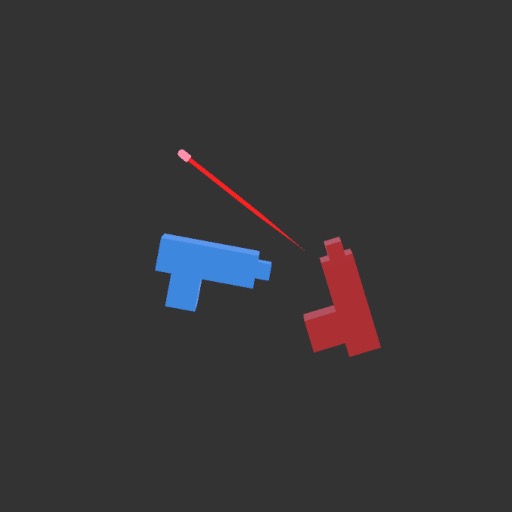
Pistol Duel builds its action around one exaggerated rule: firing a handgun creates enough recoil to move and rotate the weapon. The player taps to shoot, using the same bullet to damage an opponent and the kickback to change position, dodge, climb, or line up the next shot. The mechanic creates a small timing puzzle.
Firing too early may spin the barrel away from the target, while waiting can leave the gun exposed. A useful shot may be aimed partly for movement rather than direct damage, especially when platforms or obstacles shape the arena. Levels are short and immediately restartable.
Clear visual trajectories and dramatic impacts make the result of a tap easy to understand. The unusual locomotion gives the first stages more personality than a conventional auto-aim shooting gallery. The design is also narrow.
Control is intentionally indirect, opponents and layouts can rely on predictable patterns, and success often comes from repeating the same timing until the physics produce a favorable angle. It is not a realistic firearm simulator, tactical duel, or competitive test of marksmanship. Advertising and lightweight progression are part of the free mobile structure, with exact rewards and purchases subject to updates.
Pistol Duel is best for a few minutes of physics experimentation. Players looking for sustained weapon customization, online competition, or carefully simulated ballistics should not infer those features from the title or store imagery.
Base Info
Official Sources
LumenPlays points players to official store and publisher pages where available. Use these links to review current pricing, availability, privacy details, and device requirements.
Screenshots
How to Play Pistol Duel
Watch the gun's current angle before tapping. Every shot sends a bullet forward and pushes the weapon backward, often adding rotation. Consider both effects rather than firing whenever the barrel briefly points toward the enemy.
Use early shots to establish a stable rhythm. A shot into open space can still be useful if its recoil moves the weapon away from danger or onto a better platform. Avoid rapid tapping until the direction of rotation is understood.
When the opponent is exposed, wait for the barrel to cross the target and fire slightly before perfect alignment if the weapon is rotating quickly. Account for obstacles and the movement that will occur immediately after the shot. If a stage repeatedly fails, change the timing of the first shot instead of repeating the full sequence.
The opening recoil often determines every later angle. Restarting quickly is usually more useful than continuing from an uncontrollable position. Treat weapon skins, reward ads, and other unlocks as optional unless they clearly alter mechanics.
The game uses stylized physics, so real-world firearm handling and safety knowledge do not apply to its movement.
Pros
- Recoil combines movement and attack in one control.
- Short stages restart quickly.
- The mechanic is easy to understand visually.
- Successful timing produces entertaining physics moments.
Cons
- The central interaction has limited variety.
- Indirect control can feel arbitrary.
- Advertising can outlast very short stages.
Beginner Tips
- Read barrel angle before every tap.
- Use recoil for positioning as well as damage.
- Avoid rapid fire until rotation is predictable.
- Adjust the first shot when a sequence fails.
- Do not interpret the physics as realistic firearm behavior.
FAQ
How does the gun move in Pistol Duel?
Each shot produces exaggerated recoil that pushes and rotates the weapon.
Is precise aiming controlled directly?
No. Players time shots around the weapon's current physics-driven angle.
Is this a realistic shooting simulator?
No. Its recoil, movement, and combat are deliberately stylized.
What should change after repeated failure?
Adjust the timing of the opening shot because it often determines the rest of the sequence.
Similar Games