Description
Inside is a tightly directed puzzle-platformer whose oppressive world, physical animation, and wordless storytelling remain exceptional. Its puzzles are accessible and purposeful, though the short campaign and disturbing imagery will not suit every player.
Inside Review
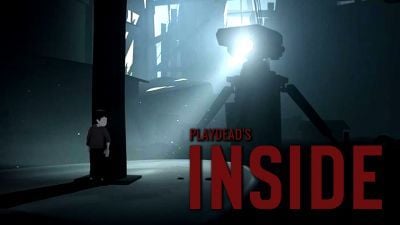
Inside follows a nameless boy moving through forests, farms, factories, laboratories, and increasingly surreal spaces. There is almost no text or conventional explanation. Movement, lighting, machinery, and the behavior of distant people establish the rules and story.
The controls are deliberately small: run, jump, climb, push, pull, and interact. Puzzles use timing, weight, water, sound, machinery, and groups of controlled bodies. Most solutions are logical once the environment is read correctly, and checkpoints make experimentation inexpensive.
Animation gives every action unusual weight. The boy stumbles, strains, swims, and reacts to nearby danger, making simple movement feel vulnerable. Death scenes can be abrupt and graphic despite the muted visual style.
Inside is highly linear, but direction is not the same as passivity. The camera frames clues without marking them, and several sequences ask the player to infer a rule from an enemy’s reaction. Optional hidden devices support an alternate ending and reward careful exploration.
The campaign is short and offers limited replay after its puzzles are known. Its value comes from pacing and cohesion rather than quantity. Players should avoid spoilers, use headphones at a safe volume, and allow the final section to remain ambiguous instead of expecting every image to receive a literal explanation.
Base Info
Official Sources
LumenPlays points players to official store and publisher pages where available. Use these links to review current pricing, availability, privacy details, and device requirements.
Screenshots
How to Play Inside
Move through each environment and interact with objects that respond to pushing, pulling, climbing, or activation. If the route appears blocked, inspect the foreground, background, ceiling, water level, and nearby machinery before assuming a jump is impossible. Use momentum for longer jumps and swinging ropes.
Move boxes or other objects beneath ledges, onto switches, or into water when their physical properties suggest a purpose. Many puzzles require actions in a specific order rather than fast execution. During stealth sections, watch patrol direction, light, sound, and repeated movement.
Wait for a safe cycle before crossing. When creatures or machines respond to noise, test their range from a protected position. Checkpoints are frequent, so treat death as information.
Change the exact action that caused failure rather than rushing the whole sequence. Explore side spaces for hidden devices, but complete the main route first if searching damages the pacing. On mobile, use a supported controller if touch movement feels imprecise and verify device compatibility before purchasing.
Pros
- Environmental storytelling is exceptionally cohesive.
- Animation gives movement physical weight.
- Puzzles integrate naturally with the world.
- Frequent checkpoints encourage experimentation.
Cons
- Campaign is relatively short.
- Replay value falls after solutions are known.
- Death imagery can be disturbing.
Beginner Tips
- Observe environmental movement before acting.
- Use boxes and water according to their physics.
- Wait for patrol cycles.
- Treat checkpoints as experimentation tools.
- Avoid story spoilers.
FAQ
Does Inside explain its story directly?
No. It relies on visual events, environments, and interpretation rather than dialogue or exposition.
Is Inside a difficult platformer?
Timing matters, but puzzles and observation are more important than advanced platforming execution.
Are there optional secrets?
Yes. Hidden devices are placed away from the main route and connect to an alternate ending.
Is it appropriate for children?
Its muted style includes violence, death, body horror, and unsettling themes; guardians should review the rating and content.
Similar Games