Description
Tomb of the Mask turns four-direction swipes into fast maze runs where the character slides until hitting a wall. The movement is crisp and immediately satisfying, although ads, energy systems, and repeated hazards dilute longer sessions.
Tomb of the Mask Review
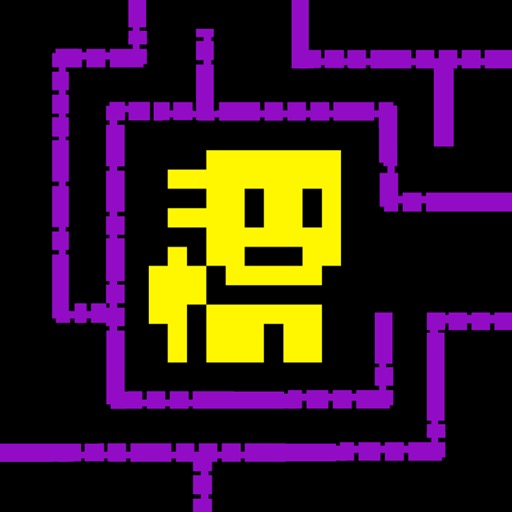
Tomb of the Mask uses an elegantly strict movement rule. Swipe in a direction and the masked explorer travels in a straight line until a wall stops the motion. Coins, stars, traps, enemies, and narrow passages turn each maze into a sequence that must be read before the next swipe.
The campaign levels are short enough to restart quickly, while arcade play applies the same controls to an upward-moving survival challenge. New masks and power-ups provide progression, but the core satisfaction comes from recognizing a safe route and executing it without hesitation. The neon pixel art keeps hazards readable even when the pace increases.
Difficulty grows through spikes, moving enemies, projectiles, switches, and routes that punish one premature input. Some failures reflect poor planning; others come from entering a new section before its hazards are fully visible. The free-to-play structure adds advertising, timers, and optional purchases around an otherwise clean arcade design.
This makes continuous play less smooth than the controls deserve. Tomb of the Mask remains a strong mobile maze game because every swipe has a clear consequence. It is most enjoyable in short sessions where speed and route memory can improve together.
Base Info
Official Sources
LumenPlays points players to official store and publisher pages where available. Use these links to review current pricing, availability, privacy details, and device requirements.
Screenshots
How to Play Tomb of the Mask
Swipe up, down, left, or right to send the character sliding in that direction. Movement continues until a wall or stopping surface is reached. Collect dots, coins, and the required stars while avoiding spikes, enemies, projectiles, and other hazards.
Reach the exit to complete a campaign stage. Before swiping, identify both the stopping point and what can attack along the path. A safe destination may still expose the character to a moving enemy.
Use walls as deliberate brakes and plan several moves ahead when switches or temporary hazards are involved. In arcade mode, keep climbing because the danger below advances continuously. Favor readable routes over detours for a small coin cluster.
Power-ups can protect a run or collect nearby items, but learn the movement rules without depending on them. On campaign stages, gather stars only when the return path remains safe; completing the level is better than repeatedly losing to an optional pickup. Make one clean swipe at a time so accidental double inputs do not send the character into the next trap.
Pros
- Crisp and intuitive swipe movement
- Compact levels encourage quick retries
- Readable neon pixel presentation
- Campaign and arcade modes use the mechanic differently
Cons
- Ads frequently interrupt play
- Energy and monetization systems add friction
- Hazards and level patterns become repetitive
Beginner Tips
- Check where the character will stop before every swipe.
- Watch moving hazards through a complete cycle before entering their lane.
- Use walls as brakes when planning a multi-step route.
- Prioritize survival over optional coins during a strong arcade run.
- Avoid rapid repeated swipes that can queue an unintended direction.
FAQ
Why does the character keep moving?
Each swipe sends the character in a straight line until a wall or stopping surface is reached.
What is the difference between campaign and arcade mode?
Campaign uses designed maze stages, while arcade mode is an upward survival run with continuous pressure.
Are all stars required to finish a level?
Stage requirements can vary, but optional collection should not be attempted when it makes the route unsafe.
Do masks change gameplay?
Masks and power-ups can provide different benefits, although precise route planning remains the main skill.
Similar Games