Description
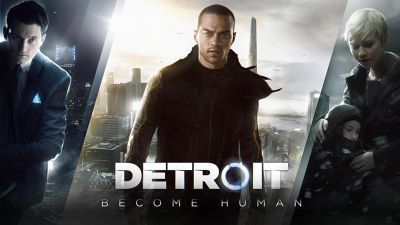
Detroit: Become Human is a visually impressive branching drama whose choices can radically alter character survival and later scenes. Performances and replay structure are strong, though its political allegory is blunt and many interactions prioritize cinematic spectacle over subtle storytelling.
Detroit: Become Human Review
Detroit: Become Human follows androids Connor, Kara, and Markus in a near-future city where artificial workers begin developing autonomy. Connor investigates deviants for the police, Kara protects a child, and Markus becomes central to an android movement. Their paths intersect according to player decisions, failures, relationships, and discovered information.
The branching structure is the main achievement. Characters can die while the story continues, entire chapters may be skipped or transformed, and post-scene flowcharts reveal paths without immediately showing every requirement. Quick-time actions, dialogue timers, investigation reconstruction, and environmental exploration create frequent choices.
The writing is less consistent than the structure. Civil-rights imagery is used directly and sometimes carelessly, dialogue can overstate themes, and certain twists weaken earlier emotional stakes. Movement is slow, while quick-time sequences may punish players unfamiliar with the controls unless accessibility settings are adjusted.
Detroit is most compelling as an interactive performance and replay experiment. It rewards accepting consequences on a first run, then exploring how different attitudes and failures reshape the narrative. The soundtrack's separate musical identity for each protagonist also helps the three story lines feel distinct.
Base Info
Official Sources
LumenPlays points players to official store and publisher pages where available. Use these links to review current pricing, availability, privacy details, and device requirements.
Screenshots
How to Play Detroit: Become Human
Explore each scene before advancing the obvious objective. Scan environments for clues, optional conversations, and interactable objects that may unlock later choices. During investigations, collect enough evidence before reconstructing the event.
Dialogue decisions are often timed. Choose according to the character you want to portray rather than trying to predict a perfect outcome. Relationships, public opinion, software instability, and prior discoveries affect available branches.
Adjust quick-time difficulty and accessibility before action-heavy chapters. On a first playthrough, continue after mistakes instead of reloading; consequences are central to the design. Use the flowchart later to revisit branch points, but understand that some paths require decisions from several earlier chapters.
Examine magazines and background objects only when they do not threaten a timed objective. During action scenes, follow the configured button symbols rather than anticipating from animation alone. If replaying, begin from the required chapter and continue forward; isolated chapter changes may not propagate without saving subsequent progress.
Pros
- Extensive meaningful branching.
- Strong performances and visuals.
- Character deaths do not simply end the story.
- Flowcharts support replay.
Cons
- Themes are handled bluntly.
- Movement can feel slow.
- Quick-time sequences may obscure narrative choices.
Beginner Tips
- Explore before completing objectives.
- Accept first-run consequences.
- Track character relationships.
- Adjust QTE accessibility.
- Use flowcharts on later runs.
FAQ
Can main characters die?
Yes, and the broader story can continue with major changes.
Should failed choices be reloaded?
A first run is usually stronger when consequences are accepted.
What do flowcharts show?
They display visited and unvisited branches after a chapter, supporting replay.
Is it primarily an action game?
No. It is a branching cinematic narrative with exploration, dialogue, investigation, and quick-time action.
Similar Games