Description
Dark Souls III combines the series' strongest boss roster, responsive combat, flexible weapons, and haunting visual callbacks into a focused finale. Its progression is more linear than earlier games and relies heavily on familiar imagery, but moment-to-moment play is superb.
Dark Souls III Review
Dark Souls III sends the Ashen One across Lothric to return escaped Lords of Cinder to their thrones. The world revisits themes, characters, and ruins from earlier games, presenting a universe exhausted by repeated attempts to preserve the Age of Fire. Environmental storytelling remains strong, though nostalgia sometimes replaces new explanation.
Combat is faster and more fluid than previous Dark Souls entries. Dodges recover quickly, weapons have distinct skills, spellcasting is flexible, and bosses use long multi-phase attack sequences. Estus can be divided between health and focus points, forcing builds to balance weapon arts or magic against healing.
The main route branches less than Dark Souls or parts of Dark Souls II, but individual areas contain good shortcuts and secrets. Some enemies attack with speed closer to Bloodborne while the player still follows stamina rules, and multiplayer balance has shifted through years of community optimization. The Ashes of Ariandel and Ringed City expansions add difficult endgame areas and memorable conclusions.
Dark Souls III is the easiest trilogy entry to control and one of the hardest to stop replaying, especially for players who enjoy mastering bosses and testing new builds.
Base Info
Official Sources
LumenPlays points players to official store and publisher pages where available. Use these links to review current pricing, availability, privacy details, and device requirements.
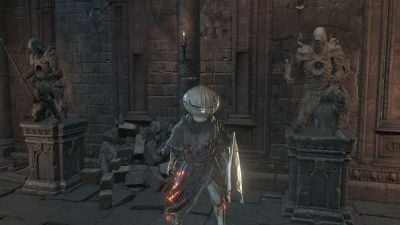
Screenshots
How to Play Dark Souls III
Choose a weapon style and practice its range, stamina cost, and Weapon Art. Dodge through attacks when appropriate rather than always moving away, then punish the final swing of a combo. Keep enough stamina to escape after attacking.
Allocate Estus between health and focus at the blacksmith according to the build. Upgrade one primary weapon, but carry an alternative for resistant enemies. Explore side routes for Estus Shards, Undead Bone Shards, covenants, and NPC quest lines.
Bosses frequently change patterns during later phases. Spend early attempts learning rather than consuming every limited item. Do not level all damage attributes equally; choose strength, dexterity, intelligence, faith, or a planned hybrid.
Back up saves through supported platform methods before experimenting with irreversible endings. Return to Firelink Shrine regularly to upgrade the flask, weapons, and character level. Ember restores full health and enables summons but also opens invasion risk.
Against fast enemies, use shields selectively; repeated blocking can empty stamina and create a guard break.
Pros
- Outstanding boss encounters.
- Fast responsive combat.
- Large weapon and build selection.
- Strong expansions.
Cons
- World progression is relatively linear.
- Heavy reliance on series callbacks.
- Some enemy speed feels mismatched.
Beginner Tips
- Learn complete boss combos.
- Keep escape stamina.
- Focus damage attributes.
- Collect Estus upgrades.
- Explore NPC quest lines carefully.
FAQ
Is Dark Souls III beginner friendly?
It controls smoothly but remains difficult; focused builds and patient boss study make it approachable.
What are Weapon Arts?
Special weapon abilities that consume focus points and vary by equipment.
Are the expansions worthwhile?
Yes. They add demanding areas, important lore, and several major bosses.
Must earlier games be played first?
No, though many locations and themes carry more meaning with series knowledge.
Similar Games