Description
Brain Puzzle 3: Crazy Mind continues the series with short visual riddles built around misdirection, object manipulation, wordplay, and unexpected touch gestures. Its comic surprises work in small doses, but inconsistent logic and ad-supported hints make it closer to playful guessing than a serious brain test.
Brain Puzzle 3: Crazy Mind Review
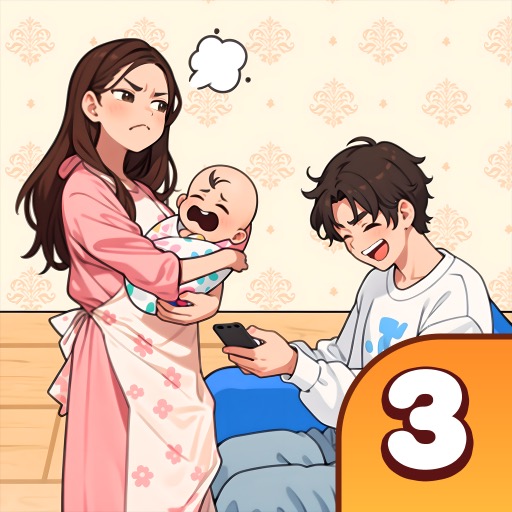
Brain Puzzle 3: Crazy Mind presents a stream of illustrated scenes, each with a brief instruction and a deliberately non-obvious solution. A level may ask players to tap a hidden detail, drag one object onto another, interpret a sentence literally, use more than one finger, or interact with the device itself. The pleasure comes from recognizing that the apparent problem is usually not the real one.
The format is easy to sample. Levels are short, controls require no specialist knowledge, and the exaggerated characters give correct answers a comic payoff. It can be entertaining with another person because discussing possible tricks is often more enjoyable than finding the answer alone.
A loose story links some scenes without demanding close attention. The quality of the riddles varies considerably. Strong levels hide a clue in plain sight and produce a fair moment of realization.
Weak ones depend on an interaction the artwork never suggests, a translation-sensitive phrase, or random tapping. Once familiar tricks such as moving labels or using multi-touch have appeared several times, later puzzles become easier to predict. Hints and skips may also turn confusion into advertising pressure.
Crazy Mind is best treated as a casual collection of visual jokes. It rewards curiosity and experimentation, but failing a level says nothing meaningful about intelligence.
Base Info
Official Sources
LumenPlays points players to official store and publisher pages where available. Use these links to review current pricing, availability, privacy details, and device requirements.
Screenshots
How to Play Brain Puzzle 3: Crazy Mind
Read the instruction exactly as written, then inspect the complete scene before touching anything. Try the direct interpretation first. If it fails, drag foreground and background objects, combine related items, or move something that appears decorative.
Text, numbers, and interface elements may also be part of the puzzle. Use one hypothesis at a time. Random tapping can accidentally complete a level without revealing why the solution worked.
If ordinary taps and drags fail, consider safe multi-touch, device rotation, or another gesture already introduced by the game. Keep a firm grip on the phone and never perform a physical action that could damage it. When stuck, restart the scene and identify what information appears to be missing.
A hint is most useful after narrowing the possibilities rather than immediately revealing the trick. Because the surprise is the main reward, completed levels have limited replay value.
Pros
- Short riddles are easy to share.
- Varied interactions create occasional strong surprises.
- Comic scenes give answers personality.
- No specialist knowledge is required.
Cons
- Some solutions feel arbitrary.
- Repeated trick patterns reduce surprise.
- Hints and skips may be tied to ads.
Beginner Tips
- Read instructions literally before assuming normal puzzle rules.
- Drag decorative objects to check for concealed clues.
- Treat text and interface elements as possible puzzle pieces.
- Test one interaction at a time instead of tapping randomly.
- Use device gestures only when they are safe and reasonably suggested.
FAQ
Is Brain Puzzle 3 a formal logic game?
No. It mixes visual jokes, misdirection, wordplay, hidden objects, and unconventional touch interactions.
What should I try when tapping does not work?
Drag objects, combine items, inspect the wording, and consider previously introduced multi-touch or orientation gestures.
Do failed puzzles measure intelligence?
No. Many answers depend on guessing the designer's joke rather than applying a consistent reasoning system.
Can levels be replayed?
They can be revisited where the app allows it, but most lose their challenge once the trick is known.
Similar Games