Description
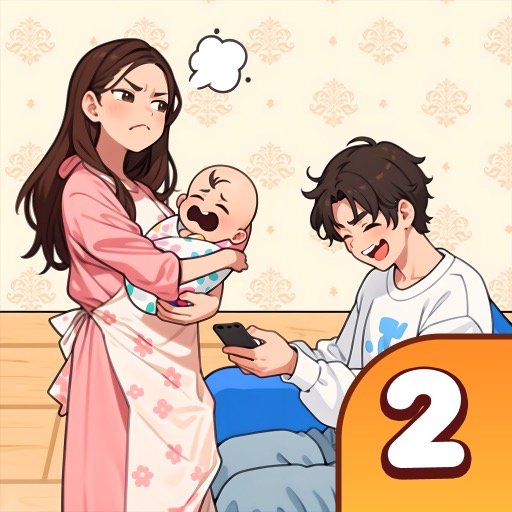
Brain Puzzle 2: Logic Twist delivers short comic riddles that reward tapping, dragging, combining clues, and ignoring obvious assumptions. Its surprise solutions can be entertaining, but inconsistent logic, repeated trick patterns, and ad-based hints make it more of a playful guessing game than rigorous deduction.
Brain Puzzle 2: Logic Twist Review
Brain Puzzle 2: Logic Twist presents a sequence of illustrated situations with a brief instruction and one hidden solution. The expected action may involve tapping an overlooked object, dragging part of the scene, combining items, shaking or rotating the device, entering text, or interpreting the wording in an intentionally literal way. Success advances a small story and reveals the joke behind the setup.
The best levels create a fair moment of realization. Background details matter, ordinary objects behave unexpectedly, and the player learns to question whether the stated problem should be solved directly. Short scenes and simple touch controls make the game easy to share, especially when two people propose different solutions.
The line between clever and arbitrary is thin. Some puzzles depend on device gestures or hidden interactions that cannot be inferred from the art, while others repeat familiar mobile riddle tricks. When the answer is obscure, hints or skips may require advertising, turning confusion into monetization pressure.
Translation or wording can also affect puzzles built around language. Brain Puzzle 2 works best when approached with humor and a willingness to experiment, not as a formal intelligence test. A failed guess says little about reasoning ability; it often means the level expected a particular joke.
Base Info
Official Sources
LumenPlays points players to official store and publisher pages where available. Use these links to review current pricing, availability, privacy details, and device requirements.
Screenshots
How to Play Brain Puzzle 2: Logic Twist
Read the instruction carefully, then inspect every visible object before tapping. Try direct actions first, but consider whether items can be dragged, combined, resized with two fingers, or moved away to reveal something hidden. Pay attention to wording that may have a literal or deliberately misleading interpretation.
If ordinary touch interactions fail, think about device features the game may use, such as rotation, shaking, or multi-touch. Do not perform unsafe physical movements, and keep a firm grip on the device. Some levels require entering a number or word based on clues in the scene rather than general knowledge.
When stuck, reset the level and test one hypothesis at a time. Random tapping can accidentally solve a puzzle without teaching its logic. Use a hint only after identifying what information appears missing.
Because solutions often depend on surprise, replay value is limited once the trick is known.
Pros
- Short scenes are easy to sample and share.
- Varied touch interactions create occasional surprises.
- Comic storytelling gives puzzles personality.
- No specialized puzzle knowledge is required.
Cons
- Some answers feel arbitrary rather than logical.
- Trick patterns repeat across levels.
- Hints and skips may be tied to advertising.
Beginner Tips
- Read each instruction literally before assuming a standard solution.
- Drag background objects to check for hidden clues.
- Try multi-touch only after ordinary taps and drags fail.
- Test one idea at a time instead of tapping randomly.
- Treat obscure solutions as jokes, not measures of intelligence.
FAQ
What kind of puzzle game is Brain Puzzle 2?
It is a collection of short trick riddles using taps, drags, wordplay, hidden objects, and occasional device gestures.
Are the puzzles based on formal logic?
Not consistently. Many rely on visual jokes, misdirection, or unexpected interaction rather than strict deduction.
What should I try when tapping does nothing?
Drag objects, combine items, inspect the wording, or consider safe multi-touch and device-orientation interactions.
Does the game have strong replay value?
Replay is limited because the surprise largely disappears once a level's trick is known.
Similar Games