Description
Bus Frenzy: Station Shuffle is a color-sorting queue puzzle about matching passengers to arriving buses while preserving limited waiting space. Its compact boards create useful sequencing decisions, but repeated rules, booster dependence, and ad-driven retries can undermine the relaxed presentation.
Bus Frenzy : Station Shuffle Review
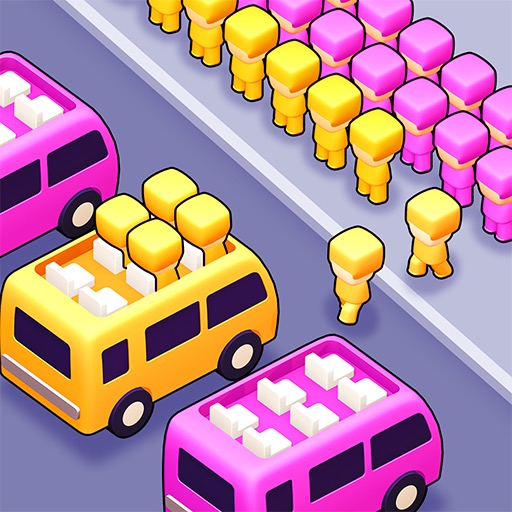
Bus Frenzy: Station Shuffle fills a station with passengers arranged in blocked rows or clusters. Buses arrive with a specific color and capacity, and the player must release matching passengers in an order that allows them to board. Any passenger selected too early may occupy a limited waiting area, potentially blocking the stage before the correct bus appears.
The puzzle works because visible matches are not always safe moves. A front passenger may need to leave so another color can reach its bus, while sending several unmatched passengers into the holding area can exhaust every slot. Special vehicles, layered queues, and obstacles gradually add complexity without changing the basic touch controls.
The format is readable and satisfying when a planned sequence clears several buses in succession. However, many stages rely on the same process of scanning colors and protecting buffer space. Hidden information or tightly packed layouts can make failure feel dependent on trial and error rather than deduction.
Extra slots, shuffles, undos, and skips are natural places for advertising or purchases to enter. Bus Frenzy is a competent casual sorting game for short sessions. Its long-term value depends on whether new stage rules continue to create real planning rather than simply adding more passengers.
Base Info
Official Sources
LumenPlays points players to official store and publisher pages where available. Use these links to review current pricing, availability, privacy details, and device requirements.
Screenshots
How to Play Bus Frenzy : Station Shuffle
Check the color and capacity of the current bus, then identify which matching passengers can reach it. Tap an accessible passenger to move them forward. If their bus is ready, they board; otherwise they occupy one of the limited waiting spaces.
Treat the waiting area as a scarce resource. Do not release a passenger merely because they are accessible. Prefer moves that fill the current bus, uncover a needed color, or create a clear sequence for the next vehicle.
Count remaining seats so an unnecessary passenger does not consume the final buffer slot. When the station is crowded, work backward from the active bus and identify which people block its matching passengers. Remove those blockers only when there is enough waiting capacity or their own bus is approaching.
Use extra slots or shuffles after understanding the dependency, not as the first response to a difficult board.
Pros
- Color and queue rules are easy to read.
- Limited buffer space creates meaningful planning.
- Short stages work well on mobile.
- Successful boarding chains feel orderly.
Cons
- Core sorting decisions repeat.
- Some boards may depend on hidden order or trial and error.
- Boosters and retries can introduce ad pressure.
Beginner Tips
- Match the active bus before freeing unrelated colors.
- Protect at least one waiting slot for unavoidable blockers.
- Count bus capacity before releasing passengers.
- Work backward from the passengers currently trapped.
- Use boosters only after identifying why the normal sequence fails.
FAQ
What is the goal in Bus Frenzy?
Board every passenger onto a bus of the matching color without filling the limited waiting area.
Why did the level fail?
The waiting slots were filled by passengers whose matching buses were not ready.
Should every accessible passenger be tapped?
No. Release only passengers who board now or safely uncover a necessary route.
What do extra-slot boosters do?
They temporarily increase the waiting capacity, reducing the consequence of an early mismatched passenger.
Similar Games