
Description
LIMBO remains a precise, unsettling puzzle-platformer whose stark silhouettes, environmental storytelling, and brutal traps work together with unusual discipline. It is short and deliberately opaque, but nearly every scene contributes to its oppressive journey.
Limbo Review
LIMBO follows a nameless boy who wakes in a dark forest and moves forward in search of his sister. The game offers no spoken explanation, visible inventory, or conventional tutorial. Its story is communicated through movement, silhouettes, machinery, hostile figures, and the consequences of entering an unknown space.
The controls are minimal: run, jump, climb, and interact with objects. From those actions, Playdead builds puzzles involving traps, weight, water, gravity, magnetism, timing, and creatures whose behavior must be observed. Death is frequent and sometimes sudden, but checkpoints are generous.
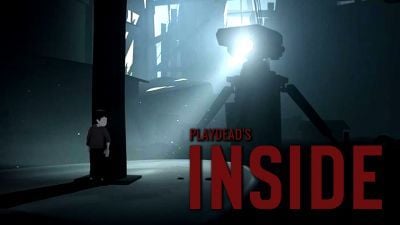
A failed attempt usually reveals the missing rule, allowing the player to test a more informed solution within seconds. The monochrome presentation is not merely decoration. Foreground darkness hides threats, distant light directs attention, and sound warns of machinery or movement outside the visible area.
Animation gives the boy enough physical weight that jumps and object placement feel deliberate. The restrained audiovisual design also leaves the meaning of many scenes open to interpretation. Some hazards require trial and error rather than deduction, and a few late puzzles demand exact timing.
Players who dislike graphic child deaths or unresolved narratives may find the experience more unpleasant than intriguing. Even so, LIMBO's compact length works in its favor. It introduces an idea, develops it, and moves on before the mechanic becomes routine.
More than a decade after release, it remains a strong example of atmosphere and puzzle design serving the same purpose.
Base Info
Official Sources
LumenPlays points players to official store and publisher pages where available. Use these links to review current pricing, availability, privacy details, and device requirements.
Screenshots
How to Play Limbo
Move carefully into each new area and watch the environment before committing to a jump. The boy can run, jump, climb short ledges and ladders, push or pull objects, and activate certain switches. If an object can be moved, test how its position changes the route rather than assuming it is background scenery.
Listen for traps and moving machinery. Bear traps, ropes, pressure plates, water levels, and creatures often react only after the boy crosses a trigger. When a death occurs, identify the trigger and use the nearby checkpoint to test one change at a time.
Many puzzles depend on momentum and timing. Position crates before activating a machine, observe a full movement cycle, and begin the run only when the route is clear. Later sections introduce gravity and magnetic effects; note which surfaces become floors and secure movable objects before changing orientation.
Avoid consulting a complete walkthrough at the first obstacle, because discovering the environmental rule is much of the game. If stuck, step away and restate the available objects, switches, and destinations. Mobile players should use deliberate inputs and confirm that a finger is not obscuring a small hazard.
Headphones make several audio cues easier to notice.
Pros
- Visual and audio design create exceptional atmosphere.
- Minimal controls support varied physical puzzles.
- Frequent checkpoints keep experimentation moving.
- The short campaign avoids unnecessary repetition.
Cons
- Some deaths cannot be anticipated.
- Late timing challenges can feel exacting.
- Story meaning is intentionally unresolved.
Beginner Tips
- Observe a full hazard cycle before moving.
- Treat each death as information about a trigger.
- Test every movable crate or hanging object.
- Set up the entire route before activating machinery.
- Use headphones for subtle environmental cues.
FAQ
Does LIMBO explain its story?
No. It uses environmental imagery and ambiguous events rather than dialogue or a definitive explanation.
Is LIMBO a horror game?
It is primarily a puzzle-platformer, but its oppressive atmosphere, violent deaths, and unsettling creatures contain strong horror elements.
How does failure work?
The boy restarts from a nearby checkpoint, so most traps can be retried within a few seconds.
Is combat a major feature?
No. Survival usually depends on movement, timing, traps, and environmental problem-solving rather than direct combat.
Similar Games