Description
Lion Studios' Wordle! expands the familiar letter-guessing format with daily puzzles and additional word modes. Color feedback makes each round immediately understandable, though ads and mode clutter make it less focused than the original web puzzle.
Wordle! Review
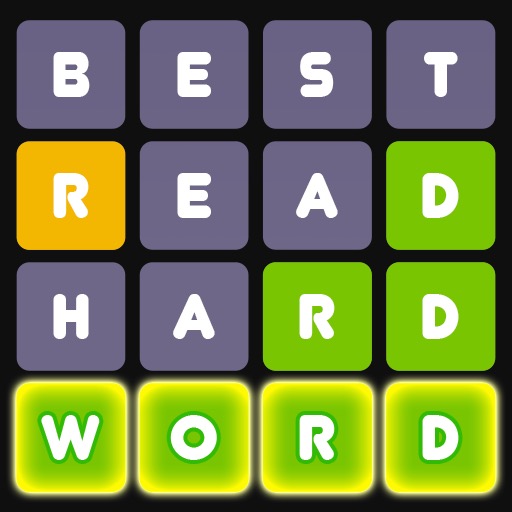
Wordle! centers on guessing a hidden word within a limited number of attempts. After each submitted guess, colored tiles indicate letters in the correct position, letters present elsewhere, and letters absent from the answer.
The feedback turns vocabulary into a compact deduction problem: every row should test a useful hypothesis rather than merely offer another possible word. This mobile version surrounds the basic daily challenge with extra modes and continued play. That is useful for anyone who wants more than one puzzle per day, and the controls are comfortable on a phone.
Statistics and streaks give regular players a clear record without changing the rules. The expanded package is also less restrained. Menus, ads, rewards, and alternate activities can distract from the elegant six-row puzzle.
Some answers or accepted guesses may feel obscure, and a strong opening can still leave several equally valid endings. Wordle! is most satisfying when players separate confirmed positions from movable letters, test common consonants efficiently, and avoid repeating information.
It suits brief daily play particularly well, while players seeking a completely minimal experience may prefer a simpler implementation of the same format.
Base Info
Official Sources
LumenPlays points players to official store and publisher pages where available. Use these links to review current pricing, availability, privacy details, and device requirements.
Screenshots
How to Play Wordle!
Enter a valid word of the required length and submit it. Read the color feedback: one color marks a letter in the correct position, another marks a letter that belongs elsewhere in the answer, and the neutral result marks a letter that is not present under the puzzle's duplicate-letter rules. Use the next guess to preserve confirmed positions while moving misplaced letters and testing several new common letters.
Do not repeat a gray letter unless duplicate behavior or another clue gives a reason. Track letter counts carefully; one copy may be valid even when a second copy receives a different result. Choose an opening word with several common, distinct letters.
By the middle attempts, stop maximizing new letters and begin constructing answers that satisfy every clue. If several words remain possible, use a probe word that distinguishes their uncertain letters, provided enough guesses remain. Daily mode ends after the set attempt limit, while other available modes may allow continued puzzles.
Review the completed grid to see which guess produced the most useful information.
Pros
- Clear deduction rules and responsive keyboard
- Daily puzzle works in very short sessions
- Extra modes provide more play
- Statistics make improvement visible
Cons
- Ads and rewards dilute the simple concept
- Some accepted words can feel obscure
- Extra modes make navigation less focused
Beginner Tips
- Open with common distinct letters instead of repeated characters.
- Keep correctly placed letters fixed in later guesses.
- Move present-but-misplaced letters to genuinely new positions.
- Pay attention to duplicate-letter feedback.
- Use a probe word when several similar answers remain.
FAQ
Is this the New York Times Wordle?
No. Wordle! by Lion Studios Plus is a separate mobile app using a similar color-feedback word format.
What does a misplaced-letter color mean?
The letter occurs in the answer but must be moved to a different position.
How are repeated letters handled?
Feedback reflects how many copies the answer contains, so identical letters in one guess can receive different results.
Should every guess test five new letters?
Not always. Early guesses benefit from coverage, but later guesses must satisfy confirmed positions and narrow actual candidates.
Similar Games