Description
The Witcher 3 remains a benchmark for story-driven open-world RPGs because even minor contracts reveal character and consequence. Combat and inventory systems are less elegant than the writing, but the complete adventure is exceptionally rich.
The Witcher 3: Wild Hunt Review
The Witcher 3 follows monster hunter Geralt of Rivia across a war-damaged world while he searches for Ciri. The main quest provides urgency, yet much of the game's identity lives in villages, contracts, and side stories that initially appear unrelated. A missing person, haunted island, or routine monster job often becomes a dispute with no clean answer.
Geralt prepares with swords, signs, potions, oils, bombs, and knowledge gathered from investigation. Combat rewards dodging and reading enemies, though movement can feel heavier than the responsive systems of newer action games. Character builds allow signs, alchemy, sword skills, or hybrids, while crafting and scavenged equipment create a substantial economy.
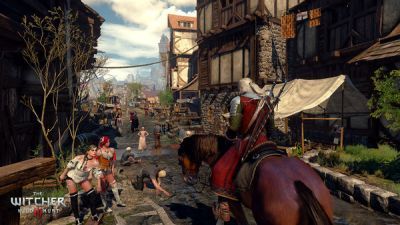
The open world is enormous without being uniformly meaningful. Some map markers lead to repetitive loot, horseback movement can be awkward, and inventory screens require patience. The writing, performances, music, and environmental detail compensate by making major regions feel culturally distinct.
Choices are rarely labeled as moral categories and may produce consequences much later. With its expansions included, the game offers an unusually broad and coherent role-playing journey. It rewards players who read contracts, prepare for monsters, and let side quests interrupt the shortest route.
Base Info
Official Sources
LumenPlays points players to official store and publisher pages where available. Use these links to review current pricing, availability, privacy details, and device requirements.
Screenshots
How to Play The Witcher 3: Wild Hunt
Use Witcher Senses to inspect tracks, bodies, scents, and environmental clues during investigations. Read bestiary entries before difficult hunts to learn vulnerabilities. Equip the correct silver or steel sword automatically or manually, then prepare useful oils, bombs, potions, and signs before combat.
Dodge quick creatures and reserve rolling for large attacks or repositioning, since constant rolls waste space and stamina. Quen provides a forgiving protective shield, while Yrden, Aard, Igni, and Axii solve different enemy problems. Repair damaged equipment and sell excess items to merchants who specialize in that category.
Choose skills that support a coherent build and place them in active slots; purchasing a skill alone does not always activate its benefit. Complete quests near Geralt's current level for useful experience, but avoid clearing every map icon automatically. Save before major conversations, read dialogue carefully, and accept that some consequences are intentionally uncertain.
Explore notice boards to reveal contracts and local opportunities.
Pros
- Outstanding quests and character writing
- Large world with distinct regions and cultures
- Meaningful preparation and build choices
- Excellent expansions add substantial new stories
Cons
- Combat movement can feel imprecise
- Inventory and crafting menus are dense
- Many minor map activities are repetitive
Beginner Tips
- Read the bestiary and prepare oils or bombs before major monster contracts.
- Use Quen while learning an unfamiliar enemy’s attack pattern.
- Activate purchased skills in available slots instead of assuming they work automatically.
- Sell weapons, armor, and crafting goods to merchants who value those item types.
- Prioritize authored quests over clearing every question mark on the map.
FAQ
Do I need to play the first two Witcher games?
No. Prior knowledge adds context, but the main relationships and conflict are explained well enough for new players.
Which sword should Geralt use?
Steel is generally for humans and ordinary animals, while silver is used against monsters and supernatural enemies.
Can the difficulty be changed?
Yes. Difficulty settings can be adjusted, though the highest modes make preparation and healing rules more important.
Are side quests worth completing?
Yes. Many contain some of the game’s strongest stories and can affect characters or later events.
Similar Games