Description
Dishonored 2 is an exceptional immersive stealth game with two distinct protagonists, inventive powers, richly layered missions, and broad freedom to improvise. Its story is less memorable than its level design, but Clockwork Mansion and A Crack in the Slab are genre landmarks.
Dishonored 2 Review
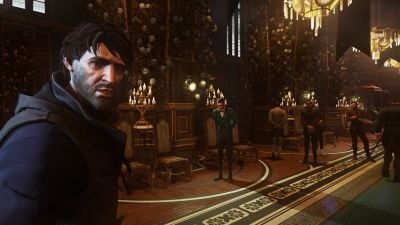
Dishonored 2 follows Emily Kaldwin or Corvo Attano after a coup removes Emily from the throne. The journey to Karnaca combines political revenge with investigations into the conspirators. Emily's Domino, Far Reach, and Shadow Walk powers differ substantially from Corvo's Blink, Possession, and Bend Time, giving each campaign a distinct toolset.
Levels are the main achievement. Dense apartments, rooftops, vents, guards, civilians, and hidden routes support stealth, combat, or mixtures of both. The Clockwork Mansion physically transforms around the player, while A Crack in the Slab allows movement between two time periods.
Objectives can often be completed lethally or nonlethally. The Chaos system responds to violence and affects the world, but nonlethal players may feel pressured to ignore entertaining weapons. Enemy awareness and movement can occasionally behave inconsistently, and the central villains lack some of the first game's presence.
Dishonored 2 remains outstanding because its systems interact: powers, traps, physics, sound, and architecture create solutions the designers did not need to script individually. New Game Plus eventually allows powers from both protagonists, greatly expanding experimental combinations on later runs and rewarding deeper system knowledge.
Base Info
Official Sources
LumenPlays points players to official store and publisher pages where available. Use these links to review current pricing, availability, privacy details, and device requirements.
Screenshots
How to Play Dishonored 2
Choose Emily for new movement and linking powers or Corvo for a familiar toolkit. Use the Heart to locate runes and bone charms, but explore naturally so objectives do not become marker chasing. Look upward and behind buildings for alternate routes.
Lean, peek through keyholes, disable alarms, and observe guard patrols before acting. Sleep darts, chokeholds, distractions, and environmental routes support nonlethal play. In combat, block, parry, slide, use powers, and combine gadgets rather than trading sword strikes.
Quick-save before experiments and keep multiple manual saves. Chaos rises with widespread killing, not a single necessary mistake, so choose the tone you enjoy. Read mission clues because several targets have optional nonlethal resolutions that require investigation.
Use bottles, alarms, and thrown objects as distractions, and hide unconscious bodies away from patrols, hazards, and rats. Rewire security devices when the result supports the plan instead of disabling everything. Spend runes on movement and information powers early if exploration is the priority.
Pros
- Outstanding level design.
- Two meaningfully different protagonists.
- Systems support creative solutions.
- Strong replay value.
Cons
- Story and villains are uneven.
- Nonlethal play underuses weapons.
- AI can behave inconsistently.
Beginner Tips
- Explore vertical routes.
- Observe patrols before moving.
- Combine powers and gadgets.
- Keep multiple saves.
- Choose lethal or nonlethal play intentionally.
FAQ
Should I choose Emily or Corvo?
Emily offers the newer powers; Corvo provides familiar abilities. Both support stealth and combat.
Does killing change the ending?
Overall Chaos responds to violence and affects world tone and outcomes.
Can every target be spared?
Major targets generally have nonlethal resolutions, though discovering them may require exploration.
Is Dishonored 1 required?
The sequel explains its premise, but the first game adds important character and political context.
Similar Games